
June 16, 2026
Heat Pump Maintenance and Furnace Maintenance: A Fall Checklist
Direct Answer: Heat pump maintenance is the routine care that keeps a heat pump heating and cooling efficiently: filter checks and outdoor unit clearance by the homeowner, and measured checks by a technician. Trane’s warranty requires maintenance by a licensed HVAC service provider and allows Trane to request written proof, so keep each service invoice.
TL;DR
- A fall HVAC checklist has two halves: eight homeowner tasks and five technician checks.
- Trane’s limited warranty says equipment must be maintained by a licensed HVAC service provider, and Trane may request written documentation. It names no schedule.
- Check the filter monthly and change it at least every 3 months.
- Keep 2 feet clear around the outdoor unit and 3 feet clear around the furnace.
- Schedule a heat pump twice a year and a gas furnace once a year.
- On a heat pump, avoid thermostat setbacks that bring on backup heat.
- In Elgin, book the fall visit in early October.
One liner: Do the eight homeowner tasks, book a heating tune up in early October, and file the invoice with your warranty papers.
Key numbers
| Figure | Value | Source |
|---|---|---|
| Energy use gap, well-maintained vs severely neglected heat pump | 10% to 25% | U.S. Department of Energy |
| Efficiency loss from airflow problems | Up to 15 percent | ENERGY STAR |
| Clear space around the outdoor unit | At least 2 feet | Trane |
| Clear space around the furnace | At least 3 feet for anything that can burn | U.S. Fire Administration |
| Trane heat pump parts warranty | 5 years base, 10 years registered | Trane, 2025 |
| Carbon monoxide detector replacement | Every 5 years or as the maker directs | CDC, 2026 |
| Columbia average first 36°F low | October 25 | National Weather Service, 1948 to 2014 |
| Columbia average first 32°F low | November 3 | National Weather Service, 1948 to 2014 |
Fall HVAC Checklist for Heat Pumps and Furnaces
In short: A fall HVAC checklist has two halves. You handle the filter, vents, outdoor unit and carbon monoxide alarms. A licensed technician handles the measured checks inside the equipment during a heating tune up. Finish both before late October, when the Midlands sees its first cold nights.
The first cold night is a bad time to find out the heat doesn’t work. In nearby Columbia, the average first 36°F low falls on October 25 and the first 32°F low on November 3 (National Weather Service records, 1948 to 2014). That makes early October the window for Elgin homeowners to work through the list below. It works as a heat pump maintenance checklist and a furnace maintenance checklist side by side, so you can skip any row that doesn’t match your system.
| Task | Heat pump | Furnace | Who does it |
|---|---|---|---|
| Check the air filter and change it if it’s dirty | Yes | Yes | You |
| Open and clear supply registers and return vents | Yes | Yes | You |
| Run the heat once before the first cold night | Yes | Yes | You |
| Check carbon monoxide alarm batteries | Yes | Yes | You |
| Clear 2 feet around the outdoor unit | Yes | No | You |
| Check for a leaking gutter above the outdoor unit | Yes | No | You |
| Keep anything that can burn 3 feet from the furnace | No | Yes | You |
| Tighten electrical connections and measure motor voltage and current | Yes | Yes | Technician |
| Check controls and the start, run and shut-off cycle | Yes | Yes | Technician |
| Verify airflow and refrigerant charge by measurement | Yes | No | Technician |
| Check the defrost control | Yes | No | Technician |
| Check gas connections, gas pressure, burner combustion and the heat exchanger | No | Yes | Technician |
| File the service invoice | Yes | Yes | You |
Eight of those rows are yours. Five need a licensed HVAC technician with gauges and a meter, which is what a heating tune up is. The technician rows come from the U.S. Department of Energy and ENERGY STAR checklists. The outdoor unit steps follow Trane’s homeowner guidance, the furnace clearance follows the U.S. Fire Administration, and the alarm check follows the CDC. Have an electric furnace? Skip the gas row. There’s nothing to burn. And that last row, the invoice, matters more than it looks. Trane’s warranty explains why.
What a Trane Warranty Says About Heat Pump Maintenance
In short: Trane’s limited warranty for heat pumps says the equipment must be maintained by a licensed HVAC service provider. Trane may also ask for written documentation of that maintenance. The document names no schedule, so the practical step is to have a licensed provider do the work and keep every invoice.
Most heat pump maintenance advice mentions the warranty in one line, if at all, but the document itself is more specific. Trane’s Base Limited Warranty for outdoor units lists what’s required for coverage. One requirement is that the product be “properly installed, operated, and maintained by a licensed HVAC service provider” under the instructions supplied with it. Failing to follow those instructions “shall void this limited warranty.” The next line reads: “Company may request written documentation showing the proper preventative maintenance.”
Read it closely and two details stand out. First, the document doesn’t say how often service is due, so it doesn’t say one missed visit ends your coverage. It points to the maintenance instructions that came with your unit. Second, changing a filter and clearing the yard around the outdoor unit are good care. They don’t produce a licensed provider’s service record, and the technician rows in the table above do.
| Coverage | Base Limited Warranty | Registered Limited Warranty |
|---|---|---|
| Heat pump parts, compressor and outdoor coil | 5 years | 10 years, 12 on some compressors |
| Furnace parts | 5 years | 10 years |
| Furnace heat exchanger | 20 years | 20 years, lifetime on some models |
| Labor | Not covered | Not covered |
| How you get it | Comes with the equipment | Register online within 60 days of installation |
Picture a compressor that fails in year seven. With registration, the 10-year parts term still applies. If Trane asks how the unit was maintained, one homeowner hands over a folder of dated invoices and another has nothing to show. That folder costs nothing to keep, so file the invoice from each heating tune up with your registration confirmation.
The warranty covers parts, not labor. That’s where a maintenance agreement helps. Ours includes a 15% discount on repairs and priority response, and our NATE-certified technicians leave a clear report after each visit.
One limit: this form applies to Trane products made on or after March 1, 2024. Trane’s furnace warranty carries the same maintenance wording. Older equipment and other brands come with their own terms, so check the document that came with your system. We service all brands.
Heat Pump Maintenance and Furnace Maintenance You Can Do Yourself
In short: Homeowner heat pump maintenance and furnace maintenance come down to airflow and safety. Check the filter monthly and keep registers and returns open. Keep 2 feet clear around the outdoor unit and 3 feet clear around the furnace, and check your carbon monoxide alarms. Leave refrigerant, wiring and gas to a technician.
Steps for Both Systems
- Check the air filter. Pull it out and look. If it’s gray with dust, change it.
- Open the registers and returns. Make sure no rug, couch or curtain covers a supply register or return vent.
- Run the heat once. On a mild day, set the thermostat to heat and confirm warm air comes out. Contractors get busy once winter comes, so a problem found in October is easier to schedule.
- Check the carbon monoxide alarms. The CDC says to check the batteries when the clocks change each spring and fall, and to replace the detector every 5 years or as the maker directs. The Consumer Product Safety Commission calls for an alarm on every level of the home and outside sleeping areas.
Three sources give three filter intervals:
| Source | Filter guidance |
|---|---|
| ENERGY STAR | Inspect, clean or change once a month |
| U.S. Department of Energy | Clean or change every 3 months, or as the manufacturer or installer recommends |
| Trane | Change every 30 to 90 days |
Put together, the rule is to look monthly and never let a filter go past 3 months. ENERGY STAR gives the reason: “A dirty filter can increase energy costs and damage your equipment, leading to early failure.”
Heat Pump Only
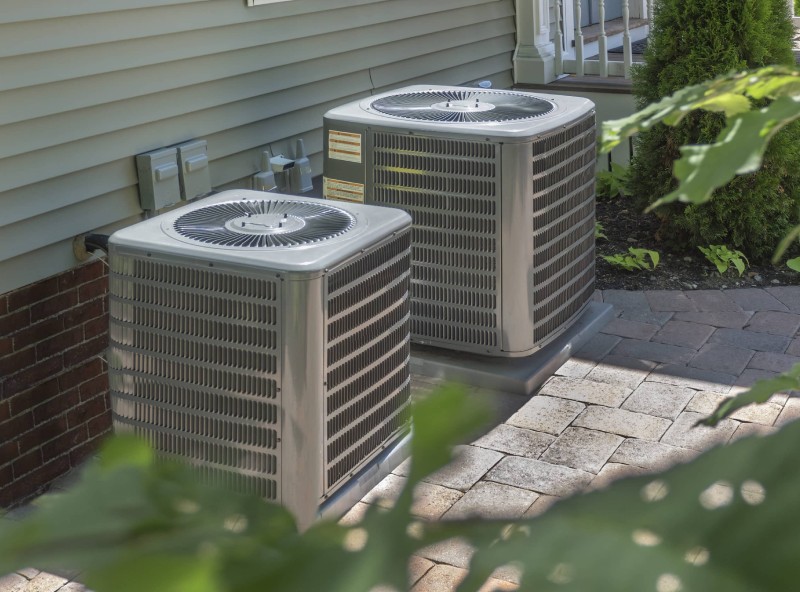
The outdoor unit needs open air on every side.
- Trim shrubs and plants back at least 2 feet on all sides, and rake leaves and pine straw away from the cabinet.
- Look up. If a gutter drips onto the unit, fix the gutter, because water can collect there, freeze and restrict airflow.
- Look at the outdoor coil. Trane says to clean it whenever it appears dirty, so ask for that at your tune up.
- After a snow or ice storm, check the unit. Heavy buildup restricts airflow, and the heat pump loses efficiency.
Light frost on a cold morning is normal. The defrost cycle handles minor icing.
Furnace Only
Fall furnace maintenance asks less of you. Keep anything that can burn at least 3 feet away from the furnace, which means no paint cans, boxes or laundry stacked beside the cabinet. Then stop. Gas connections, burners and the heat exchanger belong to a technician, and so do refrigerant and wiring on a heat pump. Those checks are what a heating tune up covers.
What a Heating Tune Up Covers
In short: A heating tune up is a scheduled visit where a technician measures, tests and adjusts the parts a homeowner can’t reach or read. On a heat pump that means airflow, refrigerant charge, the reversing valve and the defrost control. On a gas furnace it means gas pressure, burner combustion and the heat exchanger.
The homeowner steps keep air moving. A heating system tune up checks what’s happening inside the equipment, with instruments. Every check below comes from the U.S. Department of Energy, ENERGY STAR or Trane’s dealer checklist.
| Check | System | What it catches |
|---|---|---|
| Electrical connections, motor voltage and current | Both | Faulty connections, which can cause unsafe operation and shorten the life of major components |
| Controls and the start, run and shut-off cycle | Both | A system that doesn’t start, operate or shut off properly |
| Airflow, by measurement | Heat pump | Airflow problems, which can cut efficiency by up to 15 percent |
| Ducts, blower and indoor coil | Heat pump | Dirt, obstructions and duct leaks |
| Refrigerant charge and leaks | Heat pump | Too much or too little refrigerant, which makes the system less efficient |
| Reversing valve | Heat pump | A fault in the valve that switches the unit between cooling and heating |
| Defrost control, at the fall visit | Heat pump | A defrost cycle that won’t clear frost from the outdoor coil |
| Gas connections and gas pressure | Gas furnace | A fire hazard and a possible contributor to health problems |
| Burner combustion and heat exchanger | Gas furnace | A dirty burner or cracked heat exchanger, which makes the furnace less safe and less efficient |
Heat Pump Service and Maintenance: What the Technician Checks
A heat pump heats and cools with the same equipment, so it never gets a season off. The Department of Energy puts a number on what neglect costs. The difference in energy consumption between a well-maintained heat pump and a severely neglected one can range from 10% to 25%. That’s the price of skipping maintenance for years, not a saving promised by one visit. Trane puts a heat pump’s life at about 15 years, longer with regular maintenance. Trane’s dealer checklist also marks the defrost control check “in the fall only”. A fall visit isn’t a repeat of the spring one.
Gas Furnace Maintenance: What the Technician Checks
On a gas furnace, the checks are about safe burning first. ENERGY STAR says why: “Improperly operating gas (or oil) connections are a fire hazard and can contribute to health problems.” A dirty burner or a cracked heat exchanger gets found with the cabinet open and the burner under test. Electric furnaces skip the combustion checks and still get the electrical and control checks.
Before the visit, note anything that seems off: new rattling, grinding or hissing, a burning or musty smell, weak airflow, or rooms that won’t reach the setting. It gives the technician a head start.
Our technicians put down drop cloths, wear shoe covers and leave a clear report after each visit. That report goes in your warranty folder. Our heating services cover repair, replacement and duct work if the tune up turns something up.
How Often to Schedule Heat Pump Maintenance and Furnace Maintenance in Elgin, SC
In short: Schedule professional service for a heat pump twice a year, in spring and fall. A gas furnace needs it once a year, in fall. Once a year is the minimum the Department of Energy gives for a heat pump. In Elgin, book the fall visit for early October.
| System | Minimum | Schedule that fits | Sources |
|---|---|---|---|
| Heat pump | At least once a year | Twice a year: spring for cooling, fall for heating | U.S. Department of Energy, ENERGY STAR, Trane |
| Gas furnace | Every year | Once a year, in fall | CDC, U.S. Fire Administration, ENERGY STAR |
The Department of Energy sets the floor: “You should have a professional technician service your heat pump at least once a year.” ENERGY STAR’s schedule checks cooling in the spring and heating in the fall. A heat pump does both jobs, so it lands on the calendar twice. Trane says the same for its own equipment, a dealer checkup twice a year. For gas, annual furnace maintenance is the standard. The CDC and the U.S. Fire Administration both say to have heating equipment serviced or inspected every year by a professional.
When should you call? ENERGY STAR notes that contractors get busy once winter comes. In Elgin, early October puts you ahead of the first cold nights and ahead of the rush. The fall clock change is a good backstop. If the visit isn’t booked by then, book it that weekend, and check the alarm batteries and the filter while you’re at it. Maintenance agreement customers don’t have to remember. We call you to schedule, with heating tuned in fall and AC in spring.
Thermostat and Backup Heat Settings for Fall
In short: On a heat pump, hold the thermostat steady in heating season and leave the fan on auto. Save emergency heat for a real failure. The Department of Energy warns against any setback that brings the backup heat on, because backup heat costs more to run.
| Setting | What the Department of Energy says | What to do |
|---|---|---|
| Setback | “Do not set back the heat pump’s thermostat if it causes the backup heating to come on.” | Avoid setbacks big enough to trigger the backup heat |
| Fan | “Operate the system on the ‘auto’ fan setting on the thermostat.” | Use auto, unless the system has a high-efficiency, variable-speed fan motor |
| Thermostat type | Consider a programmable thermostat with multistage functions suitable for a heat pump | If you replace the thermostat, choose one built for heat pumps |
Thermostats show backup heat two ways. AUX means it’s running automatically alongside the heat pump. Emergency heat means you switched to it by hand. Backup systems such as electric strip heaters are usually more expensive to operate because they are less efficient, the Department of Energy says. Jump the setting several degrees on a cold morning and the strips may switch on to close the gap. Hold a steady setting and the heat pump does the work.
A gas furnace has no heat strip stage, so this caution doesn’t apply to it. Does AUX heat run all the time, or does the outdoor unit ice over and stay iced? Read what emergency heat does and how to tell defrost mode from a breakdown, then call us.
Schedule a Heating Tune Up in Elgin, SC
In short: Do your eight rows of the checklist, then schedule a heating tune up with Evans Heating & Cooling before the first cold night. Call 803-438-1902 or use our contact page. We serve Elgin, Lugoff, Camden and the rest of Kershaw County.
Evans has been a family business since 1976. Our technicians are NATE-certified, and we hold an A+ rating with the BBB. A maintenance agreement adds three things to the visit:
- A transferrable agreement
- Never an overtime charge
- 24 hour emergency service
Ready? Schedule a heating tune up today, and file the invoice when we leave.
Frequently Asked Questions
In short: Ten quick answers on tune ups, service intervals, warranty terms and thermostat settings.
What is a heating tune up?
A heating tune up is a scheduled visit where a technician tests and adjusts a heat pump or furnace before heating season. ENERGY STAR’s checklist covers electrical connections, controls, the starting cycle and, on gas equipment, gas pressure, burner combustion and the heat exchanger.
What does furnace maintenance include?
Furnace maintenance includes a filter check by the homeowner and a technician’s check of electrical connections, controls, gas connections, gas pressure, burner combustion and the heat exchanger.
How often should you schedule furnace maintenance?
Once a year. The CDC says to have a heating system serviced by a qualified technician every year, and the U.S. Fire Administration says heating equipment should be inspected each year by a professional.
When is maintenance required on a furnace?
Every year before heating season, going by CDC and U.S. Fire Administration guidance. Trane’s furnace warranty also requires maintenance by a licensed HVAC service provider under the unit’s instructions, without naming an interval.
How often should a heat pump be serviced?
At least once a year, according to the Department of Energy. ENERGY STAR checks cooling in spring and heating in fall, and Trane recommends a dealer checkup twice a year.
Does a heat pump warranty require maintenance?
Trane’s does. Its Base Limited Warranty says the product must be maintained by a licensed HVAC service provider, and that Trane may request written documentation of preventative maintenance. It names no service interval.
Can I do heat pump maintenance myself?
Part of it. Trane lists filter changes, clearing 2 feet around the outdoor unit, keeping registers open and cleaning dirty outdoor coils as homeowner tasks. Airflow, refrigerant charge and electrical checks are technician work.
Should I turn my heat pump thermostat down at night?
Not if it makes the backup heat come on. The Department of Energy says, “Do not set back the heat pump’s thermostat if it causes the backup heating to come on.”
When should I schedule a heating tune up in Elgin, SC?
Early October. In nearby Columbia, the average first 36°F low is October 25 and the first 32°F low is November 3, based on National Weather Service records from 1948 to 2014.
How much energy does heat pump maintenance save?
The Department of Energy says the difference in energy consumption between a well-maintained heat pump and a severely neglected one can range from 10% to 25%. That compares years of neglect with regular care.
Definition Bank
In short: Plain meanings for the terms used in the sections above.
| Term | Plain meaning |
|---|---|
| Heating tune up | A scheduled technician visit that tests and adjusts heating equipment before the season. |
| Backup heat (AUX heat) | The second heat source on a heat pump system, such as electric strip heaters, running automatically alongside the heat pump. |
| Emergency heat | A thermostat setting, switched on by hand, that runs the backup heat alone. |
| Defrost cycle | The heat pump’s routine for clearing frost from the outdoor coil. |
| Reversing valve | The valve that switches a heat pump between cooling and heating. |
| Refrigerant charge | The amount of refrigerant in the system, verified by measurement at a tune up. |
| Heat exchanger | The furnace part that passes heat from the burner to the air moving through the house. |
| Licensed HVAC service provider | The party Trane’s warranty names for installation, operation and maintenance. The document does not define the term. |
Entity Cards
In short: Key facts on the warranty document and the company named in the sections above.
Trane Base Limited Warranty, outdoor units
| Property | Value |
|---|---|
| Form | ODR-SVW001A-EN |
| Applies to | Products made on or after March 1, 2024 |
| Maintenance | By a licensed HVAC service provider |
| Proof | Trane may request written documentation |
| Registration window |
Evans Heating & Cooling
| Property | Value |
|---|---|
| Location | 1232-B Rose Street, Elgin, SC 29045 |
| Phone | 803-438-1902 |
| In business | Since 1976 |
| Technicians | NATE-certified |
| Service area | Elgin, Lugoff, Camden, Kershaw County |
| Emergency service | 24/7 |
Sources
- U.S. Department of Energy, Energy Saver, Operating and Maintaining Your Heat Pump. https://www.energy.gov/energysaver/operating-and-maintaining-your-heat-pump
- ENERGY STAR, Maintenance Checklist. https://www.energystar.gov/saveathome/heating-cooling/maintenance-checklist
- Trane U.S., Inc., Base Limited Warranty, outdoor units, form ODR-SVW001A-EN, 2025. https://www.trane.com/pdf/warranty-letter-for-5HCL5.pdf
- Trane U.S., Inc., Base Limited Warranty, furnaces, form GW-FURN-2401A, 2024. https://www.trane.com/pdf/TRN%20ASA_GW-FURN-2401A_03112024.pdf
- Trane, Warranty and Registration. https://www.trane.com/residential/en/resources/warranty-and-registration/
- Trane, Heat Pump Maintenance. https://www.trane.com/residential/en/resources/maintenance-tips/heat-pumps/
- CDC, Carbon Monoxide Poisoning Basics, reviewed January 12, 2026. https://www.cdc.gov/carbon-monoxide/about/index.html
- U.S. Consumer Product Safety Commission, Carbon Monoxide Information Center. https://www.cpsc.gov/Safety-Education/Safety-Education-Centers/Carbon-Monoxide-Information-Center
- National Weather Service Columbia, SC, autumn 36 and 32 degree dates, 1948 to 2014. https://www.weather.gov/cae/Autumnfrostfreeze.html
- U.S. Fire Administration, Heating Fire Safety. https://www.usfa.fema.gov/prevention/home-fires/prevent-fires/heating/
Related Posts

March 14, 2026

February 17, 2026